When your marketing data
doesn't match reality
I investigate why.
Helping service businesses make confident marketing decisions.
Ranking for keywords that don’t convert
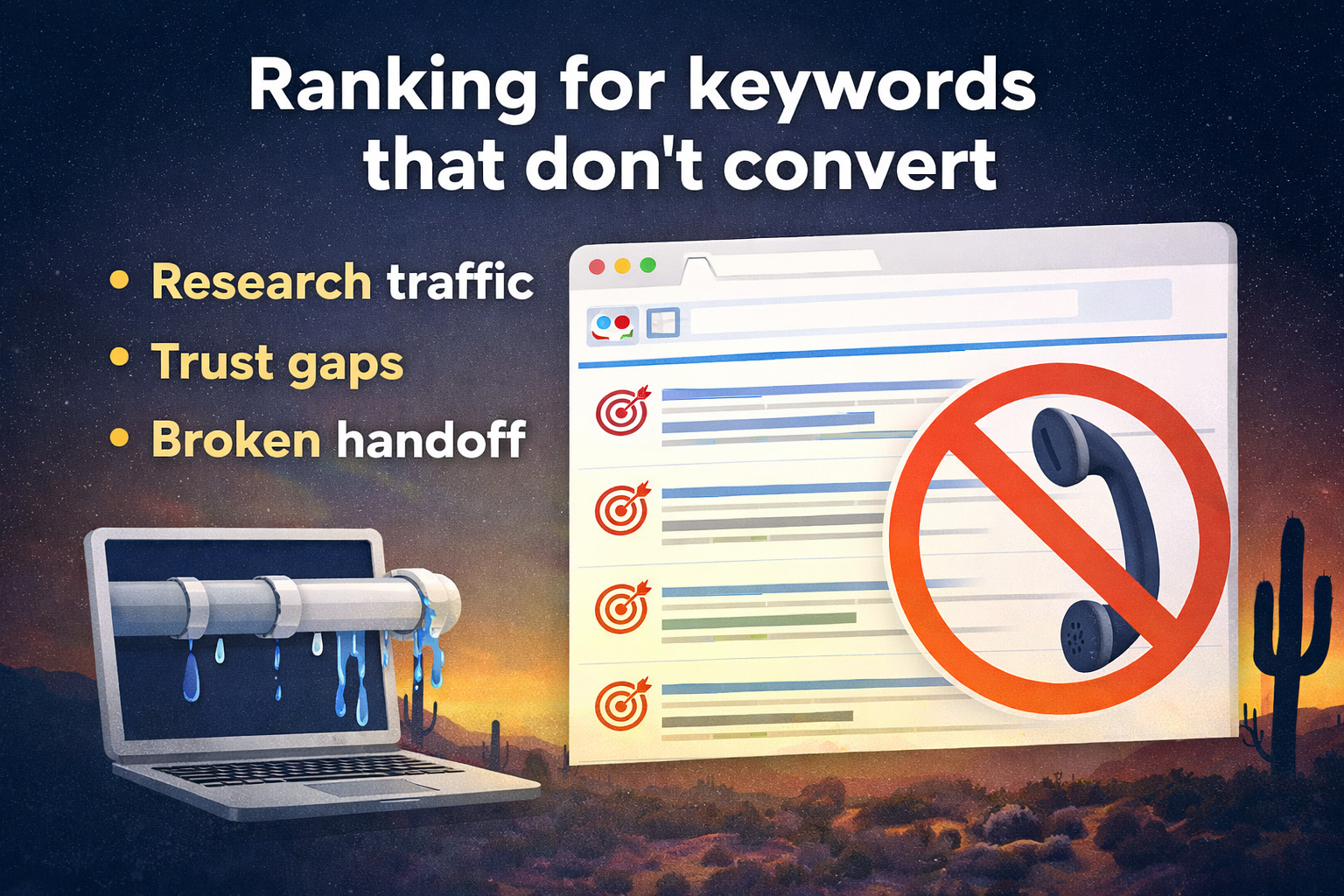
You’re showing up. People are landing. The phone is quiet. That means the pipeline is breaking between search traffic and booked jobs. This is one version of the broader problem explained in getting traffic but no calls.
If rankings are strong but calls are inconsistent, the next step is to see how the Pipeline Profit Inspection works.
The problem, stated cleanly
Ranking is not the output. Booked jobs are the output.
When you rank but don’t convert, the system looks like this:
- Input: Search visibility is working.
- Friction: Something breaks in the middle (intent, trust, or handoff).
- Output: Calls/forms don’t happen.
Why “good rankings” can still produce zero calls
1) You’re attracting research searches, not buyer searches
Some keywords bring DIY, comparison, or curiosity traffic. This is usually an intent mismatch between traffic and buying intent.
- Input: The page ranks and gets visits.
- Friction: Search intent doesn’t match a service transaction.
- Output: They leave without contacting you.
2) The headline matches the keyword but not the decision
A page can “match” a keyword and still fail the first-screen test: “Am I in the right place?” This is one reason high impressions don't automatically produce revenue.
- Input: Visitor lands from Google.
- Friction: Messaging is generic, vague, or misaligned.
- Output: Bounce. No call.
3) You have trust gaps
People don’t call when they can’t verify you fast. They keep shopping.
- Input: Interested visitor.
- Friction: Missing proof or clarity (service area, photos, specifics, expectations).
- Output: “I’ll check one more place.”
Sometimes the problem starts earlier — inside the Google listing itself. A business may be showing up in Google Maps but still not generating calls.
4) The CTA exists, but the handoff is broken
The next step feels like work: buried phone number, long form, unclear process, or too many choices.
- Input: Ready-to-buy visitor.
- Friction: Too much uncertainty or too many steps.
- Output: No submission. No call.
How to tell which failure you’re dealing with
You don’t need more guesses. You need to isolate the failing component. Most businesses experience several of the failures outlined in common visibility-to-call breakdowns.
Intent mismatch
You get traffic, but the traffic behaves like researchers.
Trust gap
They might want the service, but they can’t verify you fast.
Handoff breakdown
They’re ready, but your page makes the next step unclear or annoying.
Wrong keyword target
Ranking looks great, but it’s for queries that don’t map to your paid work.
What this page is not going to do
It’s not going to tell you to publish more blogs. If the wrong searches are landing, more traffic makes the problem worse.
The logical next step
If you’re ranking for keywords that don’t convert, the job is to identify:
- Which searches are showing up
- Which pages receive that traffic
- Where the visitor drops out
- Whether the failure is intent, trust, or handoff
If your business is showing up in Google but calls are inconsistent, the problem is usually not traffic alone. Somewhere between visibility and contact, the pipeline is breaking down.
That breakdown can happen in the search queries bringing people in, the Google Business listing they see first, the page they land on, or the path that leads them to call or book. Most businesses cannot see where that break is happening without stepping back and looking at the entire flow.
The Pipeline Profit Inspection looks at the full path between visibility and booked jobs. It identifies where leads are leaking, where intent is mismatched, and what is preventing people from taking action after they find you.
Related breakdowns: Getting traffic but no calls, Showing up in Google Maps but no calls, Traffic vs buying intent, Why impressions don’t equal revenue, Common visibility-to-call breakdowns.
- Home
- Ranks but No Calls
- Ranking for Keywords That Don’t Convert