When your marketing data
doesn't match reality
I investigate why.
Helping service businesses make confident marketing decisions.
How Internal Linking Builds Local Authority
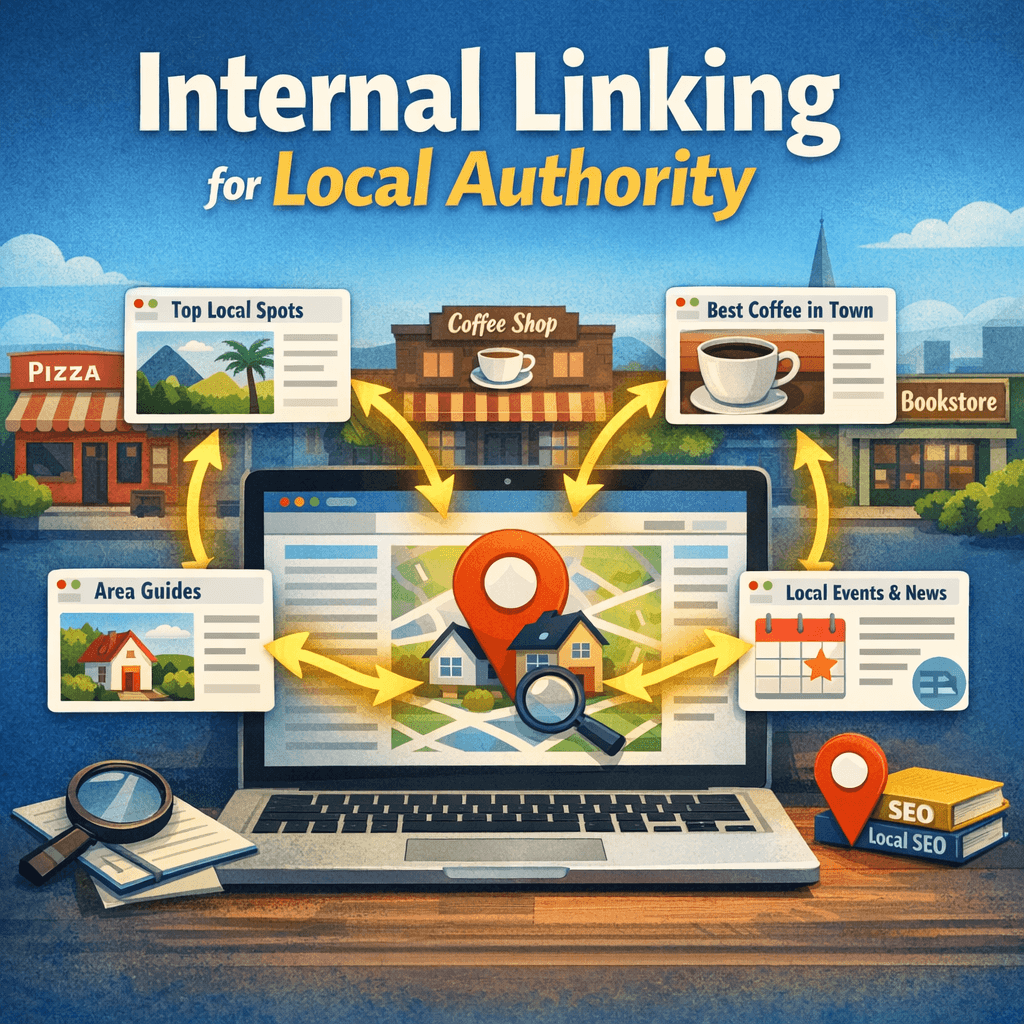
Internal linking helps local business websites in two ways: it helps Google understand the structure of the site, and it helps visitors move toward the pages most likely to produce calls.
A lot of websites have the right pages but weak connections between them. That creates a structure problem. Important pages stay buried. Authority does not flow well. Visitors land on one page and stop.
If your site is getting traffic but not enough action, this is often part of the larger issue behind getting traffic but no calls.
Start with the Pipeline Profit Inspection if your pages are visible but the site structure is not producing enough booked jobs.
What internal linking actually does
Internal links connect pages inside your own website. They help search engines understand which pages matter, how topics connect, and where authority should flow.
They also help visitors move from broad pages to more specific pages without getting lost.
For local service businesses, that usually means helping people move from:
- the homepage to a core service page
- a core service page to a related specialty page
- a service page to a city page when location matters
- an educational page to a page that can produce action
For the full structure model, see How to Structure Service Pages That Turn Traffic Into Booked Jobs.
Why weak internal linking hurts local authority
A lot of sites publish service pages, city pages, and support content but do not connect them well. The result is a loose site instead of a structured one.
That weakens authority in two ways:
- Google gets weaker signals about page importance and topic relationships
- Visitors have fewer paths into the pages that help them decide
This is one reason businesses can have useful pages on the site and still struggle with visibility-to-call breakdowns.
What strong internal linking looks like
Strong internal linking is usually simple. It follows the logic of the business and the logic of the customer.
Most local service sites work best when links move through a structure like this:
- Homepage links to core service pages
- Core service pages link to related services and supporting content
- City pages link back to the relevant service pages
- Support content links into the pages tied to action
That gives the site a clear hierarchy instead of a pile of disconnected URLs.
Homepage links should push authority downward
The homepage is often the strongest page on a local site. That means it should push authority into the primary service pages the business wants to rank and convert with.
It should not try to spread that authority across too many weak destinations. The homepage should route clearly into the pages that matter most.
For more on that structure, see Homepage vs Service Page Hierarchy.
Service pages should link laterally and downward
A service page should not sit alone. It should connect to closely related pages that support the same topic or decision path.
That can include:
- specialty versions of the service
- related service pages
- city pages tied to that service
- supporting educational pages
This helps both search engines and visitors understand the full service structure. It also gives the visitor more useful paths instead of forcing them to go back to navigation.
Support content should feed money pages
One of the biggest internal linking mistakes is publishing support content that does not lead anywhere useful.
Educational pages should reinforce authority, but they should also connect back to service pages, hierarchy pages, and pages tied to real action.
For example, a support page about page structure should naturally link to:
- Why Most Service Pages Don’t Convert
- Anatomy of a High-Converting Service Page
- Homepage vs Service Page Hierarchy
That is how content supports revenue instead of just sitting on the site.
City pages should support service authority, not compete with it
City pages often go wrong because they are created in bulk and left disconnected from the real service structure.
A city page should usually link back to the most relevant service page and fit inside a clear hierarchy. It should not feel like a random location page floating on its own.
If you are deciding whether city pages make sense, see When to Create City Pages.
Anchor text should stay clear
Internal links should use anchor text that helps people and search engines understand what they are clicking into.
That usually means plain language, not vague text like “learn more” or “click here.”
Good internal linking sounds like:
- Why Most Service Pages Don’t Convert
- Calls-to-Action That Convert Without Desperation
- Homepage vs Service Page Hierarchy
Clear anchors strengthen the topic relationships across the site.
Internal linking also improves crawl paths
When pages are connected well, search engines can move through the site more easily. That helps new pages get found faster and helps existing pages stay active in the crawl path.
For a growing authority site, this matters. A cluster with strong internal links is easier for Google to understand than a group of pages that barely reference each other.
What internal linking is not
It is not stuffing every paragraph with links. It is not linking randomly because a keyword appears. It is not forcing visitors into pages that do not match what they need.
Strong internal linking follows structure, intent, and the decision path.
How to tell if your internal linking is weak
- important pages are hard to reach from the homepage
- service pages do not connect to related services
- support content gets traffic but does not feed action pages
- city pages feel isolated
- visitors land on one page and stop
That usually means the site has pages, but not enough structure between them.
What to do next
If your internal linking is weak, start by tightening the hierarchy:
- make sure the homepage links clearly to core service pages
- connect core service pages to related service and support pages
- link support content back into pages tied to action
- make sure city pages connect back to the right service pages
If your site is visible but still not producing enough booked jobs, the Pipeline Profit Inspection helps identify where the structure, page path, or handoff is leaking leads.
- Home
- Service Page Structure
- Internal Linking for Local Authority